Cancer diagnostics · Belfast & Glasgow
Liquid biopsy, reimagined.
Faster, cheaper, better cancer diagnostics — built for everyday clinical care.
Biomarx is making next-generation cancer diagnostics rapid, low-cost and simple enough to run anywhere, starting with lung cancer.
The Problem
Cancer is still found too late, because the tools to find it early are too slow, too expensive, and too complex.
Lung cancer is the world's most common cancer, and 67% of cases are diagnosed at a late stage — when treatment options narrow and outcomes fall away. Survival has barely moved in decades.
The technology that could change this — genomic, next-generation sequencing — exists. But it is locked behind cost, complexity and specialist labour. In the entire NHS, only a handful of labs can perform these analyses. Results take weeks. A single test can cost £2,000–£7,000.
For most patients, in most places, precision diagnostics simply aren't in reach.
Early detection and personalised care shouldn't be a luxury. They should be a standard of care.
- 67%
- of lung cancers diagnosed at a late stage
- Weeks
- to get sequencing results back
- £2–7k
- cost of a single genomic test
Our Solution
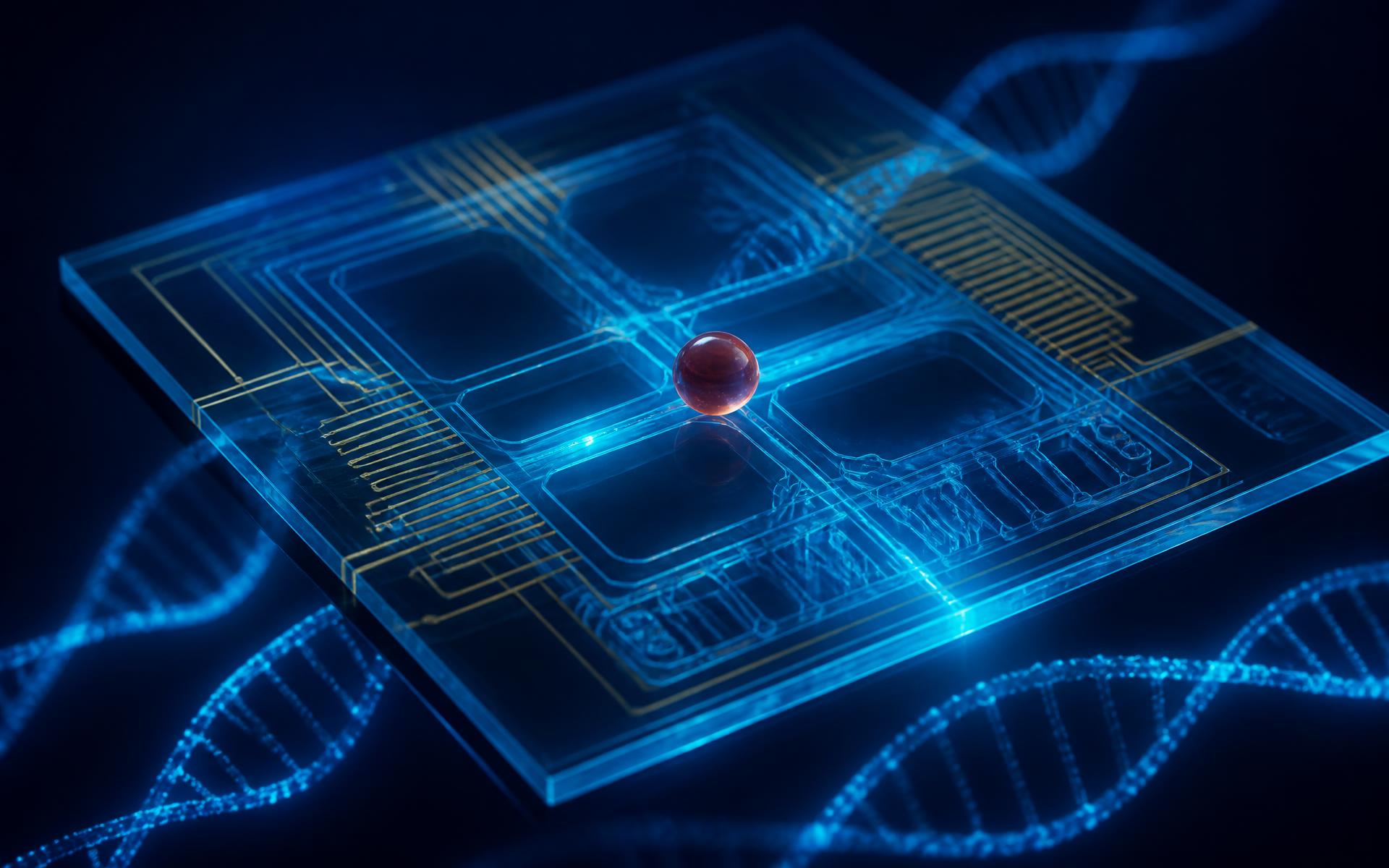
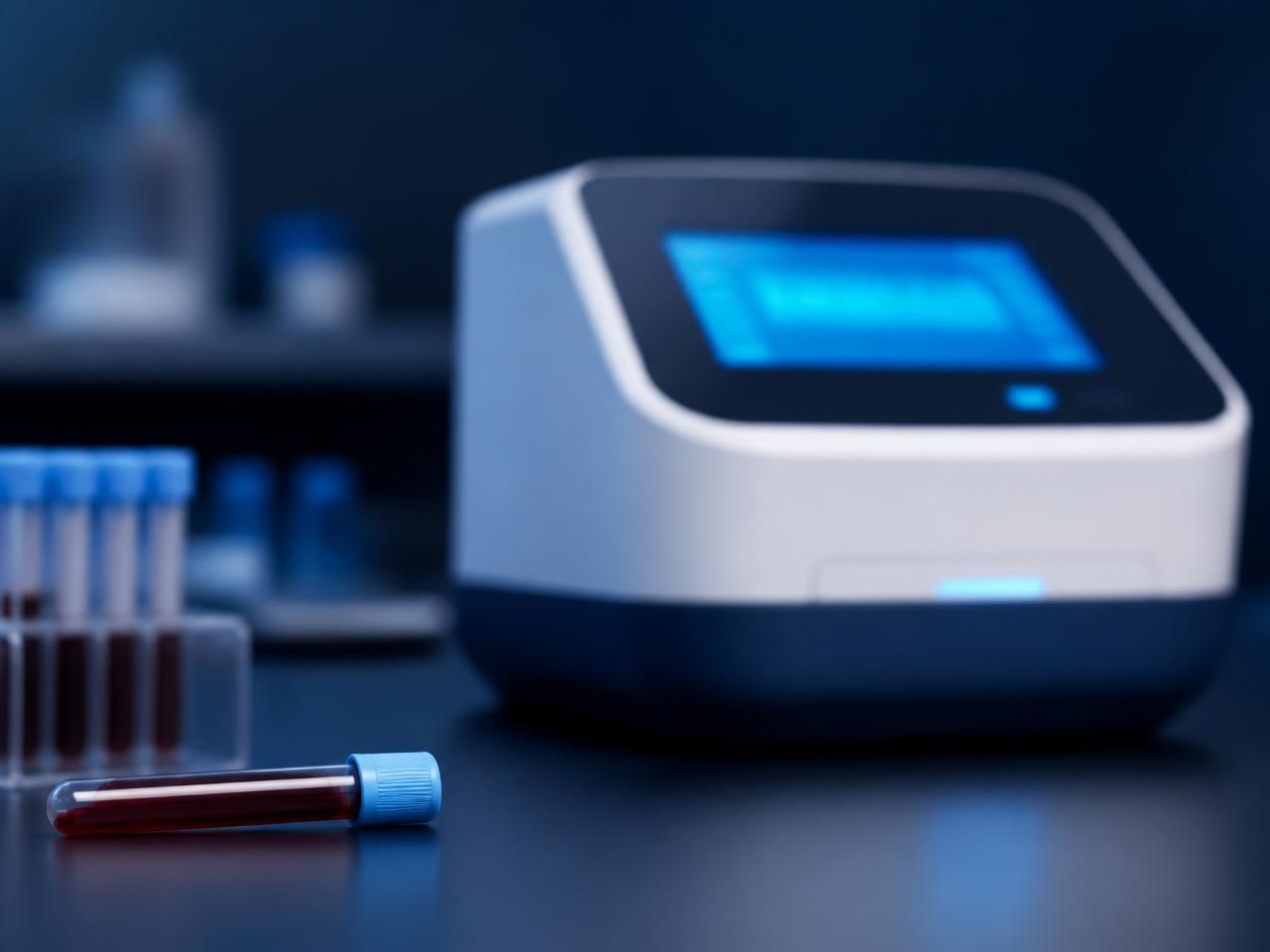
A rapid, low-cost, fully automated liquid biopsy — genomic-grade answers from a simple blood test.
Biomarx delivers sequencing-level sensitivity in a system designed for the real world: fast, affordable, and simple enough for a non-specialist to run. Our first application is lung cancer detection and monitoring, with the solution designed to extend across other cancers and conditions.
< 2 hours
Rapid
Results in under two hours, not two weeks.
~£70
Cost-effective
Around £70 a test, not thousands.
No lab
Accessible
Plug-and-play automation; no specialist lab, no advanced training.
The Science
Genomic-grade diagnostics, without the genomic lab.
Biomarx combines three technologies into one automated, plug-and-play system.
01 — Sample
Integrated sample extraction
A true sample-to-answer workflow: blood goes in, a result comes out, with nothing in between for a human to get wrong.
02 — Amplify
Proprietary isothermal amplification
Amplifying the target without the heavy instrumentation conventional PCR and sequencing demand.
03 — Read
Electrochemical biosensors
Reading genetic signal directly and electrically, rather than through slow, expensive optical sequencing.
Together they achieve sequencing-level sensitivity and accuracy — in a fraction of the time, at a fraction of the cost, with a fraction of the skill required.
How we compare
| Biomarx | Guardant | Natera | Foundation | |
|---|---|---|---|---|
| Time to result | ~2 hours | 2–5 weeks | 3 weeks | 10 days |
| Cost per test | ~£70 | ~£2,400 | £3–5k | £5–7k |
| Skill required | Basic user | Advanced | Advanced | Advanced |
| Automated | Simple, automated | Advanced | Advanced | Advanced |
Comparable to next-generation sequencing in lung cancer, at a hundredth of the cost and a fraction of the time.
Scientific Credibility
Serious science, built to the standards this field demands.
We're a deep-tech diagnostics company, and we hold ourselves to the rigour that implies across the science, intellectual property, regulatory pathway, and quality systems.
The science
Our platform is built on peer-reviewed electrochemical-biosensing research led by our Chief Scientific Officer, Prof. Damion Corrigan, one of the field's leading authorities, and translated through the Centre for Advanced Measurement and Health Translation, a joint initiative between Scottish universities and the NHS.
Intellectual property
Our approach to PCR-free, sequencing-grade electrochemical detection is proprietary and protected, and forms a defensible technology position in a high-value market.
Regulatory pathway
We have a defined route to market, not an intention to figure one out later. First release as Research Use Only (RUO), followed by in-vitro diagnostic (IVD) registration under the EU IVD-R framework and US FDA 510(k) clearance — a pathway led in-house by a team with direct IVD-R and 510(k) experience.
Quality & compliance
We are building our quality management system toward ISO 13485, the international standard for medical-device quality, aiming to be accredited by BSI by end of 2026.
Clinical grounding
Our work is guided by senior clinical expertise, including the Clinical Director of the NHS Genomic Medicine Service, ensuring what we build is designed for real clinical adoption, not just the bench.
Team
A team that spans the whole distance, from the science to the boardroom.
Deep diagnostics science, IVD operations, commercial leadership and clinical insight, in one small, focused group.

Sean Macfarlane
Founder & CEO

Prof. Damion Corrigan
Chief Scientific Officer

Alex Harkin
Chief Operating Officer

Oscar Weipers
Development Engineer
Investors & Partners
Backed by investors and institutions who know deep-tech diagnostics.

SFC Capital
One of the UK's most active seed investors.
Clarendon Fund Managers
Northern Irish based fund supported by Invest NI.

University of Strathclyde
Academic partner and investor, including a novel venture-capital-backed PhD programme embedding Biomarx's development within world-class research.
Seed Raise opening Q1 2027.
If you invest in early-stage diagnostics or deep-tech health, we'd like to talk.
Request the investor deckGet in Touch
Whether you're an investor, clinician, potential partner or someone who wants to help — we'd like to hear from you.
We're building something genuinely challenging, with a small team and a clear mission: rapid, affordable, accessible cancer diagnostics for everyone, not just the few.
- General
- hello@biomarx.co.uk